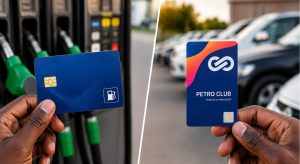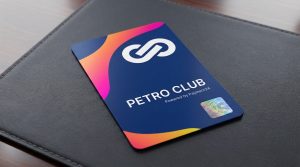
As we all know, fraud is done by people, not by vehicles. It has always amazed us how the industry focus has been on printing a vehicle registration number and driver name on a card and expecting all participating players — the attendant and the driver — to adhere to an honour system.
.
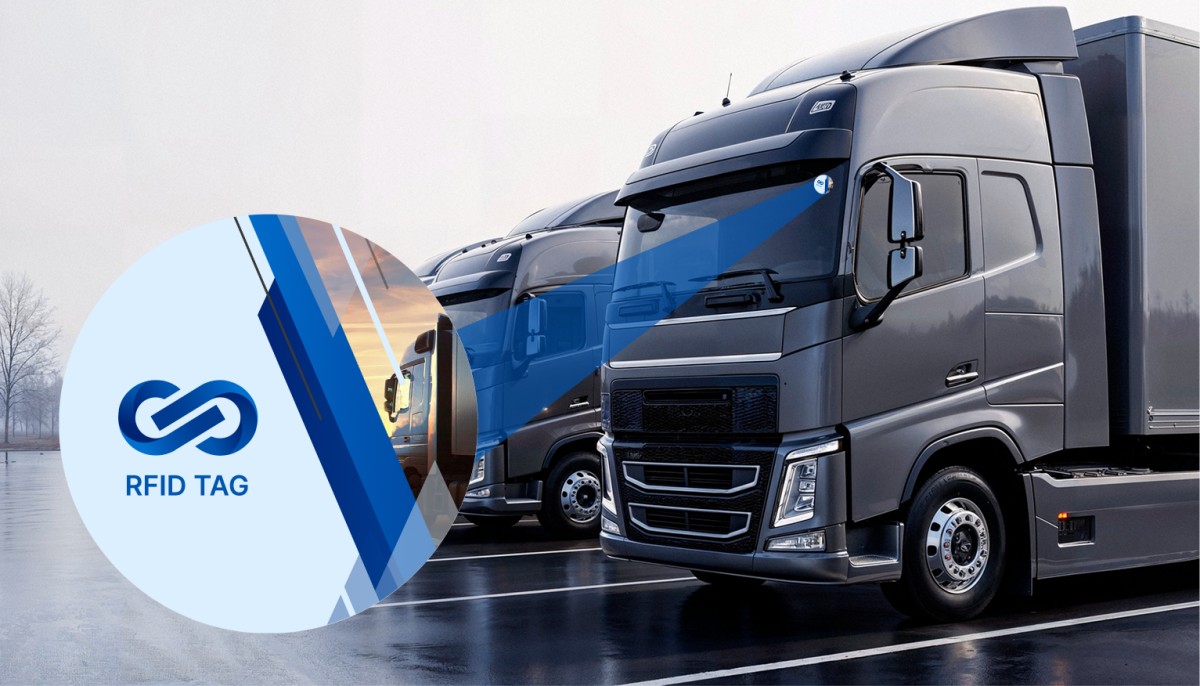
Fuel theft prevention works by tying every transaction to both the vehicle and the driver, not just one or the other. A PIN alone is easy to share. A Smart Tag fixed to the windscreen, checked together with the driver’s PIN, closes that gap and stops the most common fuel fraud before it costs you anything. The solution is simple and cost-effective, giving customers control and secure refuelling.
Introduction
Fuel theft costs South African fleets real money, and a PIN-only card makes it hard to spot. Someone claims a fill that never happened. A card gets passed between vehicles it was never meant for. By the time it shows up in the numbers, it’s already cost you.
A Smart Tag and driver PIN, checked together at the pump, closes that gap. Here’s exactly how, and which fraud types it stops.
Why PIN-Only Fuel Cards Are Vulnerable
A traditional fuel card runs on a single credential. Enter the PIN, get the fuel.
That’s also the problem. A PIN can be shared, memorised, or copied, and once it’s out, the card behind it stops meaning anything. It confirms someone typed the right number. It doesn’t confirm which vehicle is actually at the pump.
Ghost Fills: Claiming Fuel That Was Never Dispensed
A ghost fill is a transaction claimed against your account for fuel that was never actually put in a vehicle.
With a Smart Tag fixed to the windscreen, that’s not possible. The tag has to be physically present at the pump for a transaction to go through. No vehicle, no fill.
💡 Key Point: A Smart Tag must be physically present at the pump for any transaction to be authorised. No tag, no fuel.
Card Sharing Between Vehicles
This is one of the most common ways standard fuel cards get misused: one card, used across several vehicles it was never authorised for.
A Smart Tag stops that at the source. It’s fixed to one windscreen. Moving it to another vehicle means visible tampering, which is exactly what makes it easy to catch.
Unauthorised Refuels From Stolen or Copied PINs
A PIN is only half the equation. On its own, it’s just a number, easy to steal, copy, or hand over.
Paired with a Smart Tag, a stolen or copied PIN goes nowhere. It’s useless without the matching vehicle also standing at the pump.
🔒 How It Works: Smart Tag + Driver PIN = both must be present at the same time. A stolen PIN is useless without the matching vehicle.
Odometer and Volume Fraud
Fuel volumes that don’t match distance travelled are one of the easiest fraud types to miss, because nobody’s cross-checking receipts against odometer readings by hand.
Every transaction is logged against the vehicle’s registration, with litres, value, station, and timestamp attached. That gives you the record to spot a pattern that doesn’t add up, without needing to reconcile it manually yourself.
The Technology Behind It: Smart Tags and Payment24
The Smart Tag itself is tamper-evident, so removing or moving it leaves a visible mark. Underneath it, Petro Club runs on Payment24 technology, the infrastructure that authorises and logs every transaction the moment it happens.
That’s the short version. The point isn’t the technology, it’s what it stops.
FAQs
Can a Smart Tag be removed and reused?
It’s tamper-evident, so removing it from the windscreen it’s fixed to leaves visible damage. That damage is exactly what flags an attempted swap.
What happens if a tag is damaged?
Report it to Petro Club and it’s deactivated immediately, with a replacement issued for the vehicle.
Does this replace normal receipts for accounting?
Every transaction is logged automatically with vehicle, driver, station, litres, value, and timestamp, giving your business a full digital record without needing paper slips.
How quickly do anomalies show up?
Transactions land in your dashboard within seconds, so unusual patterns are visible the same day, not at month-end.
Conclusion
Stopping fraud at the pump is only half the picture. Knowing what’s happening across your whole fleet, day to day, is the other half.
That’s exactly what ongoing monitoring covers. See fuel monitoring for truck fleets for what it should be tracking across your operation.