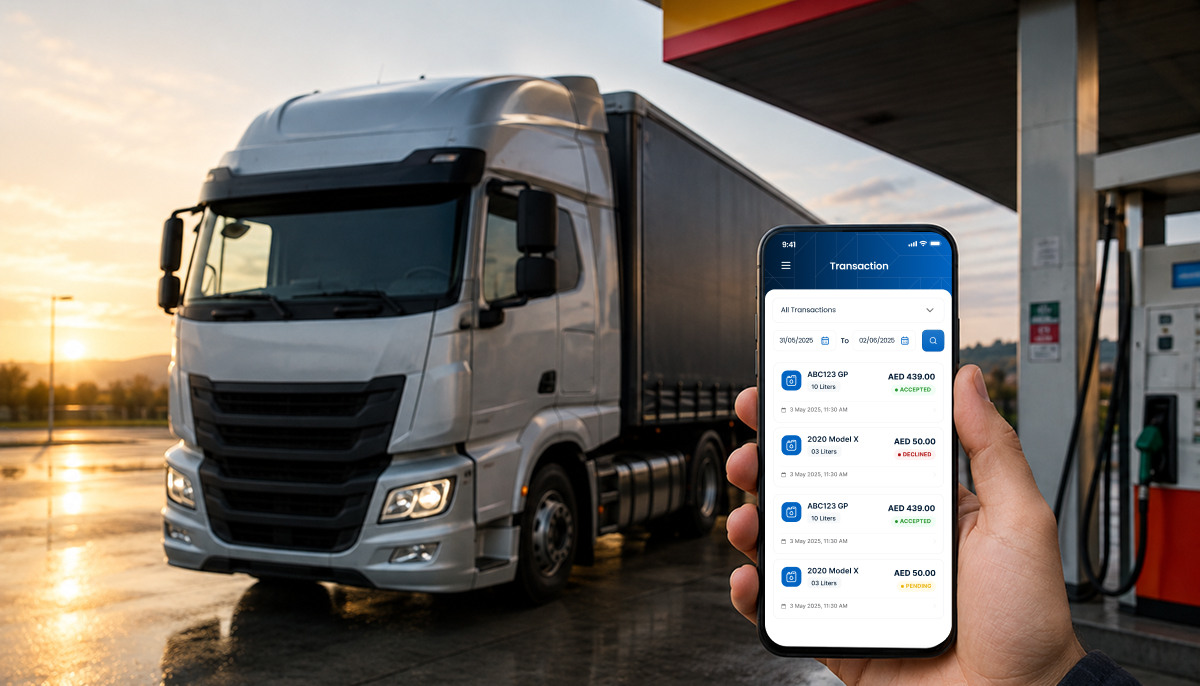
A fuel monitoring system tracks litres, value, location, and timestamp for every transaction, by vehicle and by driver, automatically. For truck fleets running long routes and higher volumes, that visibility is what turns a fuel programme from a fraud check into a genuine cost control tool.
Introduction
Stopping fraud at the pump is one layer of control. Knowing what’s actually happening across your whole fleet, day to day, is a separate need entirely, and it matters more the longer your routes get and the more drivers rotate through your vehicles.
What Fuel Monitoring Actually Tracks
A monitoring system covers litres, value, location, and timestamp for every transaction, attached to both the vehicle and the driver who filled it.
The point is that this happens automatically. You shouldn’t need to reconcile a month’s worth of receipts by hand to know what your fleet spent, where, and on which vehicle. It’s already sitting in your dashboard the moment the transaction happens.
📊 What Gets Tracked: Litres ✓ Value ✓ Location ✓ Timestamp ✓ Vehicle ✓ Driver ✓ – all automatically, in real time.
Why Trucks Need Monitoring More Than Passenger Fleets
Long-haul and heavy-duty operations carry more fuel cost exposure than passenger fleets, simply because the numbers are bigger. Longer routes. Higher volumes. More drivers rotating through fewer vehicles.
At that scale, manual tracking stops being realistic. A missed discrepancy on one truck is a rounding error. Missed across a fleet of trucks running national routes, it adds up fast.
🚛 Why Trucks Need More: Higher volumes + longer routes + more drivers = bigger exposure. Manual tracking doesn’t scale. Real-time monitoring does.
Per-Vehicle History
Per-vehicle history shows you exactly how much fuel a specific truck has used over time, and flags when that pattern starts drifting.
A truck that’s suddenly using more fuel than its usual routes and loads would suggest is worth a closer look. You’ll see it in the history before it becomes a bigger problem.
Per-Driver History
The same principle applies from the driver’s side. Where multiple drivers share a pool of vehicles rather than one driver per truck, per-driver history matters just as much as per-vehicle history.
It tells you which driver was behind which fill, regardless of which truck they were in that day.
Real-Time Alerts and Spend Thresholds
Spend controls flag unusual transactions and low wallet balances as they happen, not at month-end.
That means you catch a problem the same day it occurs, whether that’s a transaction outside a vehicle’s normal pattern or a wallet running low before your next trip.
⚡ Real-Time Alerts: Catch problems the same day they happen – unusual transactions, low wallet balances, and more. No more month-end surprises.
Station-Level Reporting for Route Planning
Beyond fraud and cost control, seeing which stations your fleet actually uses is useful in its own right. It shows you the real shape of your routes, not just where you assumed your trucks were filling up.
That’s a secondary benefit. The core job of monitoring is still visibility and control, but the route data is a useful bonus, especially for planning around Petro Club’s national network.
FAQs
How often does monitoring data update?
Transactions land in your dashboard within seconds of being authorised at the pump, so your data is current, not batched overnight.
Can it flag a vehicle that’s suddenly using more fuel than usual?
Yes. Per-vehicle history shows consumption over time, so a pattern that drifts from the norm is visible and worth investigating.
Does it work across multiple depots?
Yes. Every transaction is logged against the vehicle and driver regardless of which station or depot it happened at, so multi-depot fleets get the same visibility as a single-site operation.
Is this different from GPS tracking?
Yes. Fuel monitoring tracks transactions, litres, value, and location at the point of sale. It doesn’t track a vehicle’s live position or route in between fills. It’s built to give you fuel visibility, not vehicle telematics.
Conclusion
Monitoring only delivers value if it sits inside the right system architecture underneath it. The visibility is only as good as the platform running it.
That’s the next decision: on-premise, card-based, or prepaid wallet. See comparing fleet fuel management systems for how they stack up.