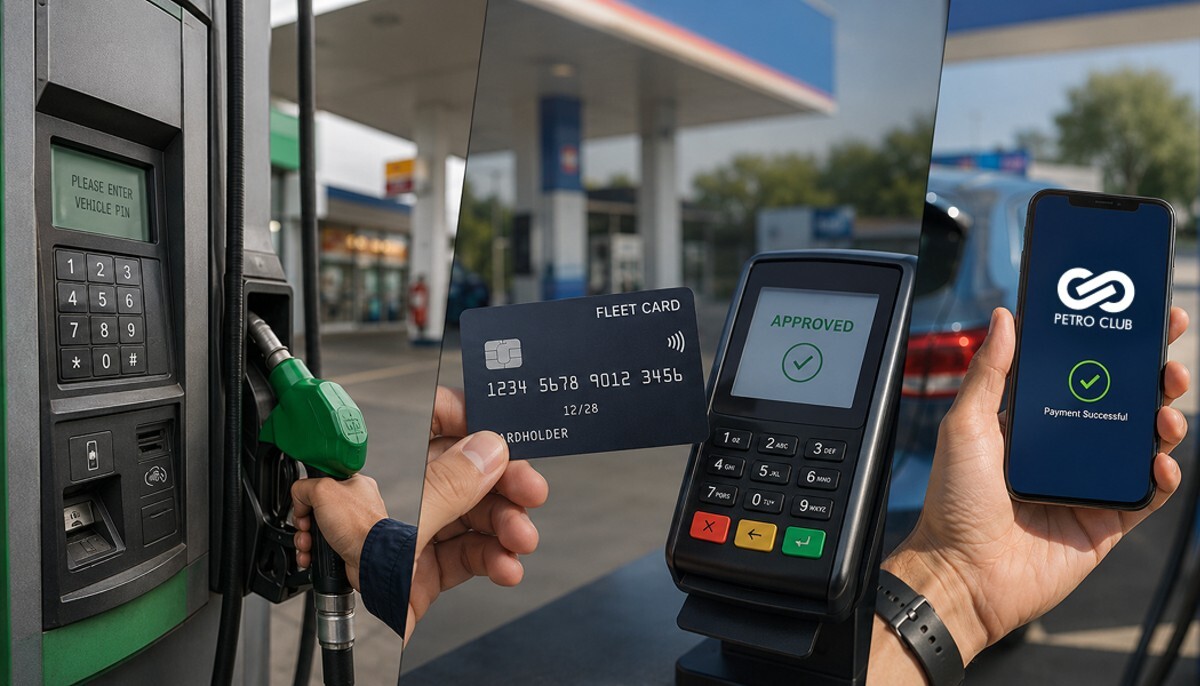
A fleet fuel management system runs on one of three architectures: on-premise, where you own the tank and dispensing setup; card-based, where fuel is bought against a credit or invoiced account; or prepaid wallet, where funds are loaded upfront and drawn down per transaction. Each carries a different mix of setup cost, credit risk, and flexibility.
Introduction
Once you’ve decided fuel needs proper oversight, the next question is which system to run it on. The right answer depends more on your fleet size and cash flow than most buyers assume, and getting it wrong usually shows up as either a large upfront bill or an ongoing credit exposure you didn’t plan for.
What “Fuel Management System” Actually Means
Before comparing options, it’s worth separating the system architecture from any single vendor’s product.
A fuel management system is the underlying model that decides how fuel gets bought, verified, and paid for. On-premise, card-based, and prepaid wallet are the three categories. Any specific product, including Petro Club, sits inside one of them.
On-Premise Fuel Systems
An on-premise system means your business owns the tank and dispensing setup on site. Fuel is bought in bulk and stored, then dispensed to your own vehicles as needed.
This typically suits larger fleets with high, predictable fuel volumes and the space to install and maintain the infrastructure. The trade-off is the upfront cost of the tank and equipment, plus the ongoing maintenance that comes with owning it.
Card-Based Fuel Systems
A card-based system means fuel is bought at third-party stations against a card tied to a credit facility or an invoiced account.
This suits fleets that don’t want on-site infrastructure but are comfortable taking on credit exposure. You’re not laying out capital for a tank, but you are extending credit terms with a fuel provider, which needs to be managed like any other credit line.
Prepaid Wallet Systems
A prepaid wallet system means funds are loaded upfront and drawn down per transaction. There’s no credit facility involved, so no credit risk to your business.
This is the category Petro Club’s model sits in. Your business only ever spends what it has loaded, and every transaction draws from that balance in real time.
Comparing Setup Cost, Credit Risk, and Flexibility
| On-Premise | Card-Based | Prepaid Wallet | |
|---|---|---|---|
| Setup cost | High (tank, dispensing equipment, installation) | Low | Low |
| Credit risk | None, once installed | Yes, tied to a credit or invoiced account | None, funds loaded upfront |
| Station access | Limited to your own site | Depends on the provider’s network | Depends on the provider’s network |
| Best suited to | Large fleets with high, predictable volume | Fleets comfortable with credit exposure | Fleets that want spend under control without credit risk |
Which System Fits Which Fleet Size
Fleet size changes which of these three makes sense in practice, and that’s worth a full answer on its own. Choosing a fuel management system for South African fleets breaks it down by fleet size, route pattern, and budget.
FAQs
Which system has the lowest upfront cost?
Card-based and prepaid wallet systems both avoid the capital cost of an on-premise tank and dispensing setup.
Does a prepaid wallet still require monthly admin?
No monthly reconciliation is needed since every transaction is logged automatically. The main ongoing task is keeping the wallet topped up.
Can a fleet switch systems without disrupting operations?
Moving between systems means re-issuing whatever credential the new system uses, whether that’s a card or a Smart Tag, and setting up drivers and vehicles again on the new platform.
Which model works best for fleets with drivers who don’t have credit history?
A prepaid wallet, since it doesn’t rely on a credit facility at all. Spend is limited to whatever’s been loaded, regardless of any individual driver’s credit history.
Conclusion
The system type sets the foundation, but it’s not the whole decision. Sizing it correctly to your fleet, your routes, and your cash flow is where the real choice gets made.
See how that plays out for South African fleets specifically in choosing a fuel management system for South African fleets.